Real Domain Modeling with Soli: Scopes, Soft Deletes, and Transactions
The Model layer in Soli is deliberately rich in the areas that matter for real applications.
Three features in particular stand out for teams building anything beyond toy CRUD: named scopes, soft deletes, and first-class transactions.
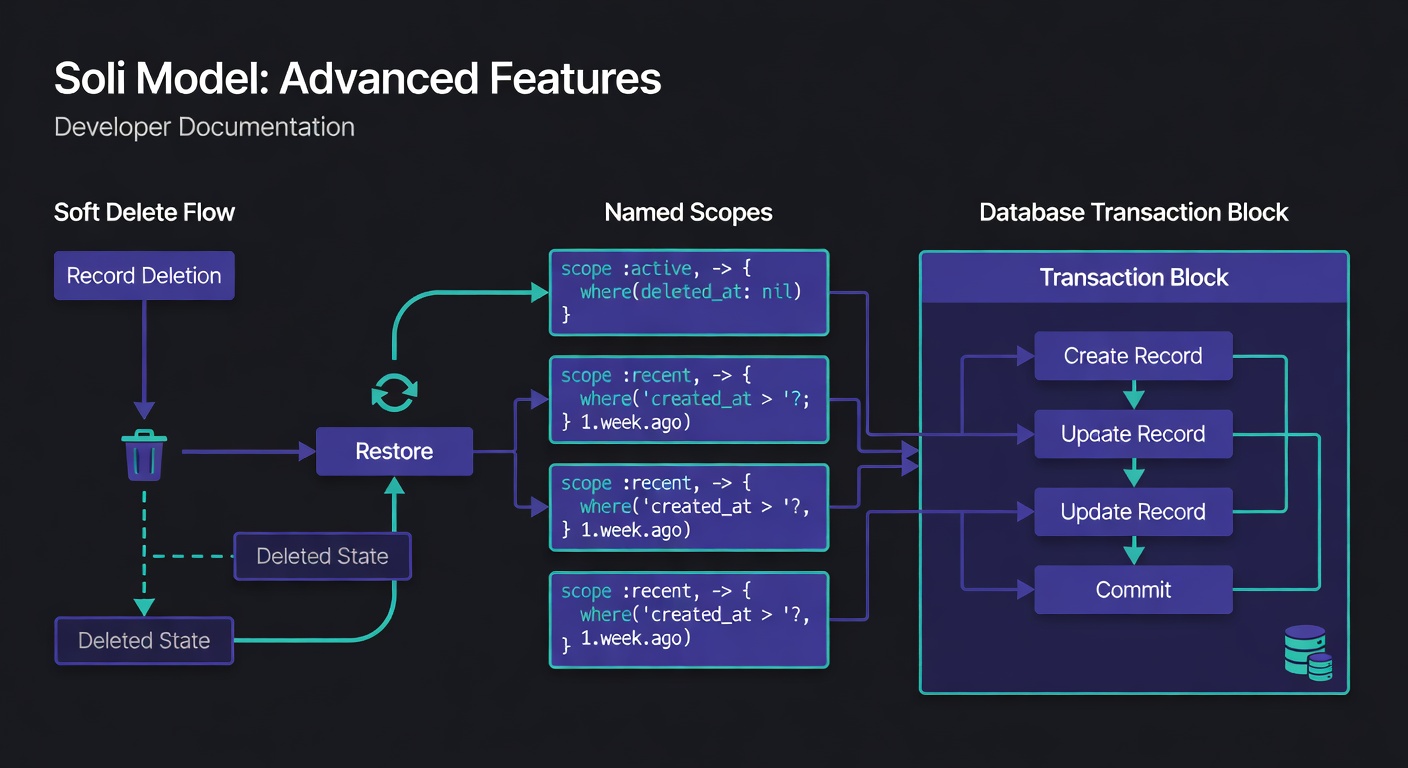
Named Scopes
Scopes let you define reusable, composable query fragments directly on the model:
class User < Model
    scope("active", fn() {
        this.where("active = @a", { "a": true })
    })

    scope("recent", fn() {
        this.order("created_at", "desc").limit(50)
    })
end
Usage is natural and chainable:
let users = User.active.recent.where("role = @r", { "r": "admin" }).all
Scopes compose cleanly and keep query logic out of controllers and views.
Soft Deletes
soft_delete is a one-line declaration with powerful behavior:
class Post < Model
    soft_delete
end
post.delete()setsdeleted_atinstead of removing the row.post.restore()clears it.Post.alland normal queries automatically exclude deleted records.Post.with_deletedandPost.only_deletedgive you the other two common views.
This pattern is so common in production systems that having it built into the base Model class removes an entire category of repetitive and error-prone implementation work.
Transactions
The transaction method supports both block style and manual control:
User.transaction {
    user = User.create!(data)
    Profile.create!(user_id: user.id, ...)

    # Everything commits together or rolls back
}
You also get lower-level control when you need it for complex multi-statement operations.
The Compound Effect
When you combine scopes + soft deletes + transactions with the rest of the model toolkit (validations, callbacks, relationships, .similar(), aggregations), you get a modeling surface that lets you express real business rules at the right layer — without fighting the framework or reaching for raw SQL on every complex query.
These are the features that separate "it works for the happy path" applications from systems that remain maintainable as complexity grows.
Soli’s model layer is opinionated in exactly the places that save teams the most time and bugs over a multi-year lifespan. Scopes, soft deletes, and transactions are three of the highest-ROI parts of that bet.